
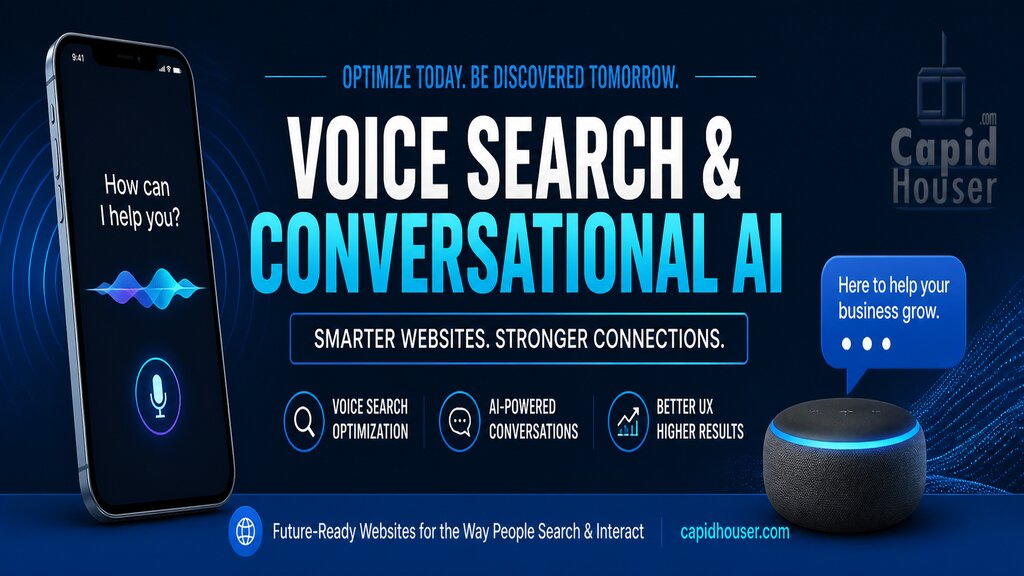
Did you know? More than 50% of all searches are now conducted by voice, and AI-driven answer engines are transforming not just how customers search—but how brands are discovered. The way we search online has fundamentally changed. For business owners, corporate marketing professionals, and ecommerce leaders alike, failing to adapt your website to cater for voice searches and conversational AI could mean missing out on crucial traffic and revenue. In this guide, we reveal why optimizing business websites for voice search and conversational AI is not just a trend, but an urgent necessity in today’s fast-evolving digital landscape.
The New Era of Search: Why Optimizing Business Websites for Voice Search and Conversational AI Matters
As voice assistants and AI-driven platforms like smart speakers and chatbots become part of daily life, businesses face a new challenge: being found and accurately represented in voice and conversational search results. Research shows that voice search optimization is reshaping the battle for search engine visibility—Google, Bing, Alexa, and Google Assistant now source answers from conversational content rather than simply listing links.
For companies investing monthly in Google Ads, content marketing, or programmatic campaigns, this evolution demands a fresh digital strategy. Conversational AI and search optimization are no longer optional; they’re pivotal to maintain a competitive edge. Shaping your brand’s presence within AI-powered answer engines ensures your business remains discoverable, trusted, and ahead of the curve as search engine behavior continues to shift.
- • Why optimizing business websites for voice search and conversational AI is crucial for the future
- • How voice search optimization drives search results and business growth
- • Key strategies for advanced search optimization including schema markup and AI-readiness
- • Actionable steps for integrating conversational AI and elevating your business profile

“AI-powered search is rewriting the rules for digital marketing—brands must be vigilant and proactive in shaping how they’re represented within conversational and answer engines.”
Understanding Voice Search and Conversational AI in Modern Search Optimization
How Voice Search is Changing Search Engine Behavior
The rapid rise of voice search has redefined the landscape of search optimization for business websites. When people speak to devices, they use natural language, ask direct questions, and expect immediate, conversational answers. According to industry studies, over half of online searches are now voice-activated, driven by the proliferation of smartphones, smart speakers, and in-car voice assistants. This means companies must optimize for long-tail, question-based keywords and anticipate how customers use voice—not just how they type. Voice searches often lead to single, featured answers—called featured snippets—instead of traditional search engine result pages. If your website doesn’t provide clear, structured answers or leverage schema markup, you risk losing out to competitors who have adopted voice search optimization best practices. This shift demands an ongoing and deliberate approach to digital content, ensuring your business meets the changing expectations of both human users and AI-powered search engines.
As you refine your approach to voice search, it’s also worth exploring how a comprehensive digital marketing makeover can further enhance your website’s performance and visibility. For practical steps and expert guidance, see how a Bristol digital marketing agency can transform your online presence with tailored strategies.

Conversational AI: The Next Frontier in Search Optimization
Conversational AI is the catalyst powering the next generation of search engine experiences. Modern AI, such as chatbots and intelligent virtual assistants, understands and responds to natural speech, extracting intent and context from complex queries. For businesses, this means optimizing website content to feed AI engines with structured, conversational content—so your information is accessible whether customers use voice assistants, search on mobile, or interact with digital agents. Integrating conversational AI-ready content signals to search engines like Google and Bing that your business is not only discoverable but also responsive to evolving user behaviors. This is a critical advantage, especially as answer engines increasingly summarize, synthesize, or personalise responses from curated content databases. Businesses not adapting their websites for conversational AI will be left behind as customers flock to brands that can answer queries instantly and contextually.
“With voice search, the interface is conversation. Your brand’s information must be structured to answer, not just display.”
The Business Impact: Why Companies Must Embrace Optimizing Business Websites for Voice Search and Conversational AI
Competitive Landscape: Businesses Investing in Search Optimization
Forward-thinking businesses are already reallocating their search marketing budgets to include voice search optimization and AI-readiness. While traditional SEO and PPC (pay-per-click) campaigns remain important, the companies dominating search results—and winning the featured snippet—are those embracing AI-powered content, schema markup, and voice-first strategies. In eCommerce, retail, finance, and B2B sectors, monthly spending on search engine and programmatic marketing is now matched by investments in conversational AI integration and technical website health. Companies failing to adapt risk decreased visibility, diminished conversions, and dropping behind as AI search engines set new standards. The differentiator isn’t just being present online—it’s about shaping how your brand is heard and trusted by digital assistants, smart speakers, and AI-driven answer services.
AI Search, Featured Snippet, and the Evolution of Search Results
Modern voice searches often return direct, spoken results sourced from featured snippet content and structured data. Unlike blue-link listings, these single-answer boxes put extra pressure on businesses to provide the “most relevant” answer, formatted specifically for AI engines and voice assistants. Implementing schema markup and optimizing FAQs, lists, and concise definitions are no longer niche tactics—they’re standard operating procedure for competitive brands. The evolution of search results is clear: customers increasingly depend on voice queries and conversational questions, expecting a natural, effortless journey from question to answer. Those who master search optimization for featured snippet and voice have a golden opportunity to land in position zero, outpace their competition, and secure a consistent inflow of organic traffic and conversions.

How Your Business Profile and Brand Perception Change with AI Engines
A brand’s digital presence today extends far beyond a static website. With AI engines, your business profile—including content, reviews, contact details, products, and FAQs—is pulled into curated answer boxes and recommendations. For companies, actively managing and optimizing this profile is essential; customers make high-trust decisions based on the information AI presents. When search engines and voice assistants (like Google Assistant or Alexa) reference your business, the accuracy, format, and richness of your data play a critical role in user engagement. Leveraging structured data and maintaining an authoritative, up-to-date online presence can reshape your reputation and directly influence customer trust and click-throughs.
Key Strategies for Optimizing Business Websites for Voice Search and Conversational AI
On-Site Voice Search Optimization Best Practices
To maximize your business visibility in AI and voice-powered search, on-site optimization becomes mission-critical. Here are best practices for ensuring your website is voice search ready:
- • Natural language content creation: Write as people speak—use full sentences, conversational tone, and anticipate user intent.
- • Focus on question-based keywords: Implement “how,” “what,” “where,” and “why” keyword phrases throughout pages and FAQs.
- • Quick-load mobile design: Ensure lightning-fast page speed, particularly on mobile devices, as voice queries are largely mobile-first.
- • Robust search engine schema markup: Add structured data to communicate with AI engines and improve answer extractability.
These voice search optimization steps aren’t optional extras—they’re vital to sustaining and growing your organic traffic in a world where digital marketing merges with smart digital assistants.
Conversational Content: Meeting User Intent with AI-Ready Pages
AI engines reward websites that address user intent directly and conversationally. This means structuring web pages to provide immediate, contextually rich answers rather than lengthy, dense content.
Build AI-ready pages by including:
- Highly targeted FAQs tailored to common voice search questions
- Short, punchy answers at the start of each section
- Data-supported snippets and numbered or bulleted lists
- Contextual cues—like geolocation, time, and service details—that make your response locally and situationally relevant
For example, Capid Houser’s AI Answer Engine Optimization Service states: “AI Answer Engine Optimization goes beyond keywords—delivering actionable, AI-focused transformations for brands. ”

Schema Markup: Structuring Data for AI and Voice Search Engines
Schema markup is the universal language that connects your business website with AI-powered engines. By tagging content with structured data, you signal to Google, Bing, Alexa, and others exactly what each section means—making it easier to extract snappy, accurate answers for voice users.
Whether adding FAQ schema, organization markup, or product details, schema enhances your eligibility for featured snippet and answer box placement. It’s an essential building block for anyone serious about voice search optimization. Adopt tools like Schema. org or plugin-based solutions and run regular audits to ensure your site is interpreted correctly by search engines.
| Schema Type | Purpose | Voice Search Use Case |
|---|---|---|
| FAQPage | Flags FAQ content for direct extraction | Voice assistants provide spoken answers to user queries |
| HowTo | Structures step-by-step instructional content | Guides users through tasks via smart speakers |
| LocalBusiness | Defines business hours, address, contact info | Powers “near me” and local voice searches |
| Product | Details product information and pricing | Enables quick product recommendations via AI assistants |
| Organization | Links generic brand info and social profiles | Ensures business profile accuracy in search |
Local SEO, Voice Search, and Conversational AI: Winning at the Micro-Moment
Optimizing Business Profile for Local Voice Queries
For location-based businesses, local SEO and voice search are deeply intertwined. Most mobile and voice searches have strong local intent, like “near me”, “open now”, or “best restaurant in [city]. ” It’s vital that your Google Business Profile and business listings on major directories are updated with accurate address, opening times, phone number, and rich attributes. Enhance your visibility by including local schema markup, collecting fresh customer reviews, and ensuring your location data is consistent everywhere online. These strategies not only help you win micro-moment queries with voice assistants but also build trust and drive real-world foot traffic.

The Relationship Between Local SEO, Schema Markup, and Conversational AI
To dominate local voice search results, connect your local SEO with conversational AI strategies and robust schema markup. Local schema feeds address and service data to smart assistants, while conversational content ensures your answers appear contextually in micro-moment searches. AI algorithms prioritise businesses with rich, accurate, and up-to-date profiles—rewarding those who optimise for spoken and typed queries. For competitive advantage, approach search optimization as an integrated discipline: merge technical, content, and local tactics for the highest visibility across all modern search engines and answer platforms.
Featured Snippets and Search Results: How to Secure the Top Spot with Voice Search Optimization
Structuring Content to Win Answer Boxes and Featured Snippets
Winning the “position zero” spot in Google or Bing often means your business is not only first in traditional rankings, but chosen as the authoritative answer by voice search devices. To achieve this:
- • Lists, tables, and concise answer formats: These formats increase your chances of being extracted for featured snippets.
- • Voice-friendly FAQ sections: Craft clear, conversational FAQs targeting common questions voiced by your customers.
- • Schema that enhances featured snippet acquisition: Apply FAQPage, HowTo, and LocalBusiness markup for maximum eligibility.
According to Capid Houser, “Most digital marketers now realise the only digital marketing services that help companies to get their websites seen in voice search results are those that pay attention to enhancing websites for AI answer engines and featured snippets alike. This is where the future of lead generation lies. ” For more, visit Capid Houser’s detailed breakdown on AI-powered search services.
Technical Foundations: Website Health for Optimizing Business Websites for Voice Search and Conversational AI
Mobile Experience and Page Speed as Core Ranking Factors
Mobile devices dominate voice search. Google and other search engines now factor page load times and responsive design into core ranking signals. Slow, unoptimized sites risk being ignored by both users and AI answer engines. Prioritise:
- • Fast, mobile-optimised layouts
- • Efficient image and code delivery
- • Minimal third-party script bloat
These measures make your site more attractive to users and essential in qualifying for voice-led search results and higher rankings on mobile search engines.

Security and Accessibility Best Practices
Security (HTTPS) and web accessibility are now baseline requirements. Voice assistants and search engines penalise unsecured or inaccessible websites, reducing your eligibility for top search rankings and voice-based results. Ensure your site uses SSL certificates, has accessible navigation and alt text (for the visually impaired), and maintains up-to-date privacy and cookie policies. These best practices are foundational not just for compliance, but for inclusion in AI-powered featured snippet and voice search results.
“Speed and accessibility aren’t luxuries—they are imperatives for being heard in voice search results.”
Measuring Success: KPIs for Optimizing Business Websites for Voice Search and Conversational AI
Analyzing Business Search Results and Featured Snippet Share
Tracking performance is key to ensuring your optimisations are effective. Focus on:
- • Visibility in voice and featured snippet results
- • Share of searches where your brand is the answer provider
- • Improvements in search results rankings and organic traffic
Tools like Google Search Console, Bing Webmaster Tools, and AI answer analytics platforms help uncover gaps and opportunities. Routinely audit where your business appears; the goal is not just ranking—but being “the answer” in your business’s search category.

Monitoring How the Brand Appears in AI Search Engine Answers
Regularly search your brand, common services, and product offerings using both voice assistants and traditional queries. Note if and how voice assistants present your brand, where they source information, and if your answers are complete and accurate. Use this intelligence to further refine content and schema, bridging any gaps in your visibility or reputation as interpreted by AI engines and conversational technologies.
Case Studies: Companies Leading in Optimizing Business Websites for Voice Search and Conversational AI
Sector Examples: eCommerce, Local Retail, B2B
Leading eCommerce companies have seen increases in conversion from voice-friendly product pages with strong FAQ schema, while local retailers have used conversational content and local schema to capture “near me” micro-moments. In B2B, companies that structure data-rich articles and on-site resources to answer nuanced industry questions are more likely to win featured snippets and referral traffic from research-driven search queries.
The results are clear: those who implement search optimization, conversational AI, and schema markup across all digital assets consistently outperform the competition in both voice search and traditional search engine rankings.
Voice Search Optimization Lessons and Best Practices
- • Invest in regular content audits and updates for new voice search trends
- • Collaborate with digital agencies like Capid Houser to accelerate technical and AI-driven improvements
- • Test and refine schema and FAQ sections to increase answer box placement
- • Monitor competitor featured snippet share to uncover opportunities
Integrating Capid Houser’s AI Search Optimization Services
Why Capid Houser: Specialized Services to Update Your Website for Voice Search and Conversational AI
For businesses ready to act, Capid Houser delivers end-to-end answer engine and AI search optimization. Their specialists transform stagnant sites with technical audits, conversational content, and structured schema to future-proof your business. As they put it, “Capid Houser’s AI Answer Engine Optimization goes beyond keywords—delivering actionable, AI-focused transformations for brands. ”
“Capid Houser’s AI Answer Engine Optimization goes beyond keywords—delivering actionable, AI-focused transformations for brands.” – Source: Capid Houser
Discover more about Capid Houser’s AI search services at capidhouser. com/answer-engine-optimization-and-ai-search/.
Steps to Onboard Capid Houser’s AI Search Service
- • Website and technical audit
- • Content and schema overhaul
- • Conversational AI integration
- • Ongoing performance tracking
By partnering with specialists, your business gains access to cutting-edge voice search optimization and AI integration, ensuring you not only keep pace but lead in search-driven customer acquisition.
People Also Ask
How can I optimize my business website for voice search?
Begin by using natural, conversational language across your web pages—think about how people speak, not just how they type. Add question-based keywords, update FAQ sections, and use schema markup like FAQPage. Ensure your website loads quickly on mobile devices, and include structured data so search engines can easily extract and vocalize your content as voice answers. Regularly monitor voice search performance and featured snippet placements to see your progress.
What are the main benefits of conversational AI for business websites?
Conversational AI enables your website to engage users more naturally, offering instant, tailored responses and seamless customer service via chatbots or digital assistants. It improves your brand’s ability to answer complex queries, increases customer satisfaction, and strengthens your business profile in search engine and voice search results. Enhanced conversational content also positions you for greater visibility in AI-driven answer boxes and featured snippets.
What role does schema markup play in voice search optimization?
Schema markup is essential for helping search engines understand and extract key business information for voice and conversational AI results. Adding markup like FAQPage, LocalBusiness, and HowTo allows platforms such as Google Assistant and Alexa to present your content as authoritative, spoken answers. This increases your chances of being featured in voice search outcomes and owning the answer box for strategic queries.
How does featured snippet optimization help with voice search?
Featured snippet optimization makes your content more likely to be chosen by search engines and voice assistants as the best answer to a user’s question. When users ask a voice assistant a question, the device often reads out the answer from the featured snippet—giving you prominent, authoritative brand exposure. Structured, concise, and informative content is more likely to secure this “position zero” spot.
Does local SEO matter in voice search and conversational AI?
Absolutely. Local SEO is crucial because most voice searches have local intent (“near me”, “open now”, etc. ). Ensuring that your business profile is complete, accurate, and includes local structured data helps voice assistants recommend your business for relevant local queries and micro-moment searches, driving both web and foot traffic.
FAQs about Optimizing Business Websites for Voice Search and Conversational AI
- What is conversational AI and why does it matter for search optimization?
Conversational AI includes chatbots, virtual assistants, and intelligent search platforms that interpret and respond to natural language questions. It’s essential for search optimization as more customers now use these interfaces for information, shopping, and support. - Are voice search optimization and traditional SEO the same?
While both aim to boost visibility, voice search optimization focuses on spoken queries, natural phrasing, and concise answers, while traditional SEO is generally geared toward written queries and web-based results. - How can my brand secure better representation in AI search results?
Use schema markup, conversational content, and consistently updated business profiles. Monitor your brand’s appearance in AI and voice search results and make data-driven updates. - Is investing in AI-focused search optimization worthwhile for small businesses?
Yes—smaller businesses gain tremendous advantage by adopting AI and voice search strategies early, ensuring local and niche visibility before competition increases.
Key Takeaways: Preparing for AI-Powered Search
- • The search engine landscape is changing fast with voice and AI-based results
- • Brands must adopt new search optimization strategies focused on AI-readiness
- • Winning featured snippet and voice search results requires deliberate, technical, and content-driven enhancements
- • Partnering with specialists like Capid Houser ensures your business is fully prepared for the future of search
Next Steps: Ensure Your Website Is Ready for Voice Search and Conversational AI
“To remain competitive, businesses must think beyond traditional SEO—embrace AI-powered optimization now.”
To learn more about The Complete Answer Engine Optimization And AI Search Service For Companies … visithttps://www.capidhouser.com/answer-engine-optimization-and-ai-search/
Watch: Explainer video on optimizing business websites for voice search and conversational AI.
The animation covers user interactions with voice assistants, snippets, local SEO maps, and data visualizations—highlighting practical business steps to get started.
Act now: Equip your business website for the AI-powered future. Leaders who optimize for voice search and conversational AI today will capture tomorrow’s customers.
As you look to future-proof your business for the era of AI-driven search, consider how a holistic digital marketing strategy can amplify your results. By integrating voice search optimization with a full digital marketing makeover, you position your brand to thrive across every channel and touchpoint. Discover how a digital marketing agency in Bristol can help you unlock new growth opportunities, streamline your online presence, and stay ahead of evolving search trends. Take the next step to ensure your business is not only found, but chosen, in the moments that matter most.
Sources
- https://www.capidhouser.com/answer-engine-optimization-and-ai-search/ – Capid Houser
- https://developers.google.com/search/docs/appearance/structured-data/intro – Google Developers
- https://searchengineland.com/voice-search-seo-data-398125 – Search Engine Land
To enhance your understanding of optimizing business websites for voice search and conversational AI, consider exploring the following resources: “10 Voice Search Optimization Tips to Enhance Your Conversational AI Marketing” (anstrex. com) This article provides practical strategies to improve your website’s performance in voice search, including mobile optimization techniques and the implementation of structured data. “How to Optimize Your Business for Voice-Based AI Searches?” (airankchecker. net) This guide offers insights into strengthening local SEO signals and utilizing schema markup to enhance your website’s visibility in voice-based AI searches. By delving into these resources, you’ll gain actionable tips and deeper insights to effectively adapt your website for the evolving landscape of voice search and conversational AI.
